

Steam record concurrent users reached 43,505,724 accounts online simultaneously on Sunday, October 11, 2026, according to the independent SteamDB tracker. That is a remarkable scale for a single PC gaming platform, but a second sentence matters just as much: online on Steam does not mean playing a game at that instant. Examine the source chart.
This distinction matters for PC gamers, developers and publishers trying to understand what a 43.5 million record actually proves. Valve’s official Steam Charts display live online totals and most-played titles; the SteamDB record is a historical tracker rather than a Valve press release. Compare Valve’s charts with SteamDB.
Steam record concurrent users: What the 43.5 million milestone measures
SteamDB lists an all-time simultaneous online peak of 43,505,724 on October 11. These are concurrent platform sessions, not distinct people who played that day, not daily active users and certainly not 43.5 million purchases. A player can be logged in while downloading, chatting or browsing the store. Read SteamDB’s live chart and date.
That makes the milestone useful as a sign of platform reach but insufficient as a measure of how long users played or which developers earned money. The average number of active games, the in-game concurrent count, account geography, and whether this was a brief spike are different questions requiring different datasets. Explore Valve’s own charts.
The all-time line and the daily line are not interchangeable
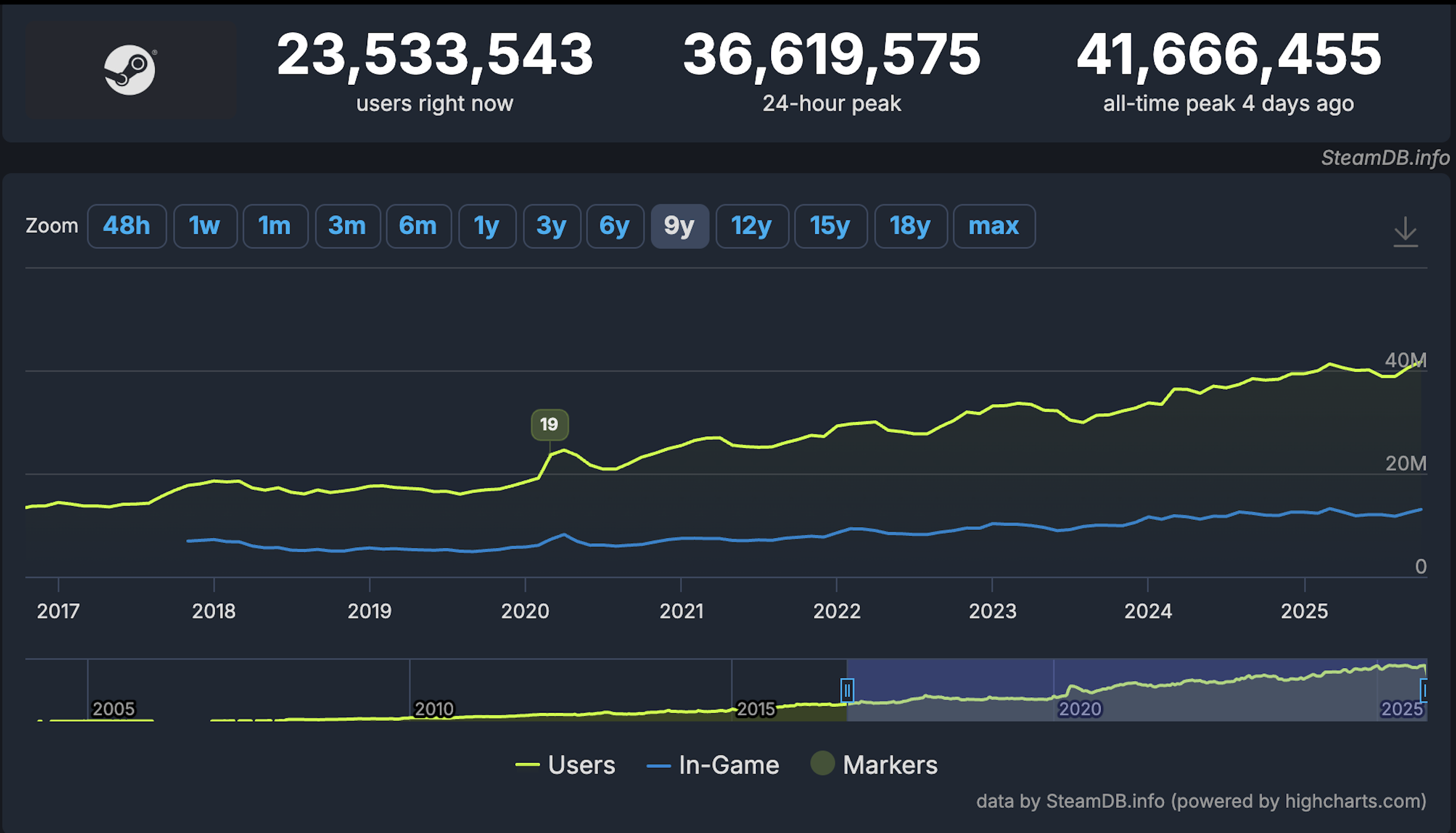
A chart can look dramatic when the top-line number increases, but interpretation depends on which series it plots. SteamDB historically shows users online and a smaller in-game series. The record is from October 11, 2026, whereas the illustrative chart above is older, explicitly labeled historical and must not be mistaken for live data. Open the current SteamDB chart for the real October peak.
Why a bigger Steam audience does not guarantee an indie hit
For developers, wider storefront reach is good in principle: more customers can encounter your Steam page, join your wishlist and potentially try a demo. But higher platform concurrency also means crowded discovery surfaces and competition for limited player attention. A first-time developer still needs meaningful screenshots, a clear product promise, a memorable trailer and an audience that actually cares about the genre. Explore Steam’s discoverability tools and charts.
Wishlists, conversion rates, demo feedback, playtest retention and sales are much more useful measures of an individual game’s prospects than this platform-wide peak. The record is a market-size signal, not permission to assume a particular project will sell. Competitive pricing and accessible demo onboarding matter more to a buyer than a record-shaped press headline. Review SteamDB’s public trend data.
What Valve’s public dashboard can tell players

Valve’s Steam Charts let readers inspect the service’s current most-played and best-selling games rather than guess which titles created the record. The platform dashboard’s live numbers move continuously, so its online count when you read this article will not equal the October 11 high. The historical record is anchored by date on SteamDB. Open current Steam Charts.
Does the record predict that PC gaming will keep growing?
It demonstrates that Steam achieved a higher simultaneous online total on October 11 than ever previously recorded by the tracker. It does not establish a permanent trend, prove overall PC hardware sales growth or reveal how users are distributed among regions. Those claims require additional research. Players can celebrate the milestone while developers should use it as one context point rather than a forecast. Follow the historical chart for subsequent changes.
The bottom line
The headline is large, and the distinction is important: 43,505,724 accounts online is not the same as 43.5 million people simultaneously playing games. Steam’s scale keeps expanding, but the decisions that matter to readers still happen at the level of individual experiences and real store pages. Check SteamDB’s record and live count.
Data sources
SteamDB’s Steam platform charts, showing the October 11 record; Valve’s public Steam Charts. Data verified October 14, 2026. Chart imagery is illustrative and dated in its caption.

