
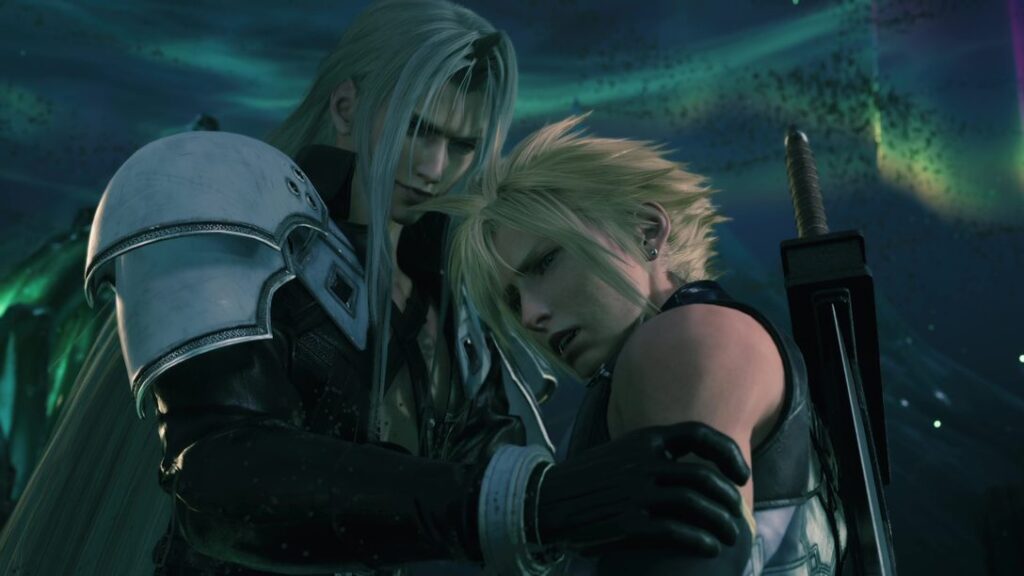
Final Fantasy VII Revelation finally has something more useful than another beautiful trailer: a combat identity.
PlayStation’s Tokyo Game Show 2026 hands-on report gives us the clearest look yet at how Square Enix is trying to make the final chapter of the remake trilogy feel mechanically distinct from Remake and Rebirth. The answer is not one giant gimmick. It is three additions working together: Vincent as a transforming ranged fighter, Cid as an aerial spear specialist, and the new FITS system that lets Cloud temporarily take on specialized combat roles.
ZerotoBeast has not played the TGS demo. The impressions below are based on PlayStation Blog’s first-party hands-on report and official information, so we are not pretending to know how the whole game feels after one showcase.
What is clear is that Revelation is not content to simply add two party members and call it a sequel.
Vincent might be the biggest combat wildcard in the trilogy
Vincent Valentine’s pitch is immediately understandable: shoot first, turn into a monster when the situation demands it.
According to PlayStation’s hands-on session, Vincent can fight at range with his firearm without manual aiming. Consecutive standard shots evolve his unique abilities through Blood Moon, Execration and Retribution, rewarding sustained offense rather than turning him into a third-person shooter bolted onto an action RPG.
Then there is the transformation.
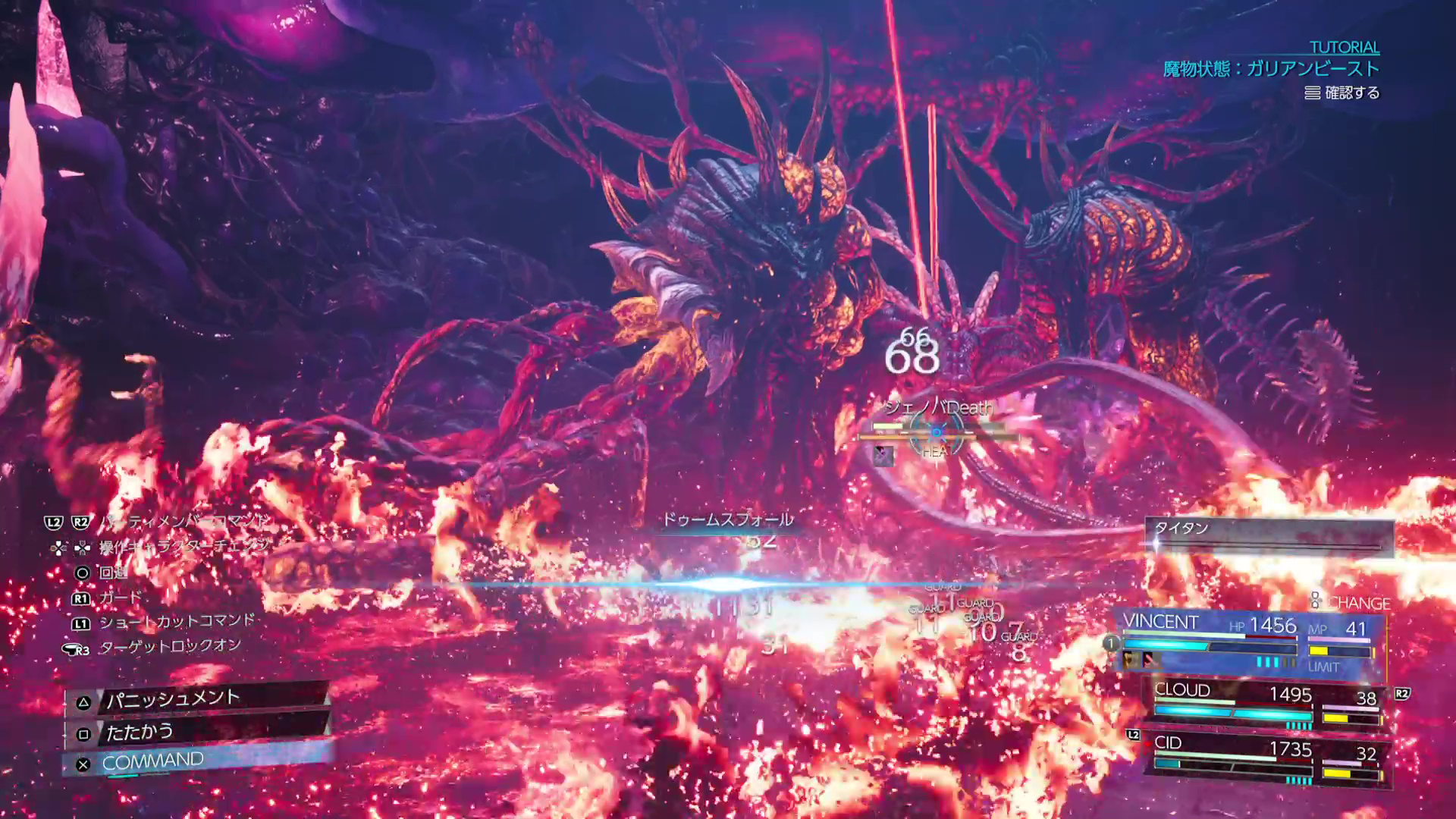
Holding R1 changes Vincent into a fast, four-legged monster form built for close-range claw attacks. The transformation itself is unlimited, but there is a cost: Vincent’s Chaos level rises over time and reduces his maximum HP. That creates a clean risk/reward loop. Monster form is not a cooldown button you press whenever it lights up. Staying transformed too long actively makes Vincent more fragile.
If the finished game supports enemies that genuinely reward switching between his two forms, Vincent could become one of the trilogy’s most flexible characters rather than simply the cool gothic guy everyone puts in the party because, well, he is Vincent.
Cid finally gets to be more than the man with the airship
Cid’s combat design goes in the opposite direction. He is a spear user built around mobility, timing and aerial pressure.
PlayStation describes chained Square attacks that branch into moves such as Dragon Spin, Hyper Dive and Ground Pound when the player hits the timing window as Cid gains a blue aura. His Triangle action, Target Spear, can charge and launch up to five spears into enemies. Those embedded spears then empower abilities such as Skydive and Burst Spiral.
That is good sequel design on paper because it gives Cid a rhythm that does not simply copy Cloud, Tifa or Yuffie. The best thing Rebirth did with its roster was make swapping characters feel like changing how you solve combat rather than changing the skin on the same combo system. Revelation appears to be preserving that philosophy.
The FITS system is the more important reveal
Vincent and Cid were expected to become playable eventually. FITS is the genuinely new variable.
FITS stands for Function-Integrated Tactical Suitwear. The system currently includes four specializations: Warrior, Knight, Black Mage and Summoner. Equipping one changes the capabilities and abilities available to the character wearing it.
In the TGS demo, Cloud uses the Summoner FITS. Activating it can call in Ifrit, Shiva, Titan and other summons for a limited duration. Triggering FITS again while a summon is active unleashes Pledge Roar, a large damage attack that consumes HP.
The interesting question is how broad this system becomes across the full campaign.
If FITS is just a handful of scripted power-ups, it could become another flashy layer on a combat system that already has plenty going on. If Square Enix uses it as a real build tool — letting players alter roles, create party combinations and approach difficult fights differently — it could become the system that gives Revelation its own identity.
The Whirlwind Maze is a smart place to show the finale
The demo takes place in the Whirlwind Maze, with eight party members heading toward Sephiroth through an eerie landscape filled with black-robed figures, strong winds and aurora-like light.
Traversal still includes shimmying along cliffs and vaulting over terrain, so anyone hoping the third game would completely abandon the environmental movement language of Rebirth should not assume that.
The combat section culminates in a fight against Jenova Deathmourner. PlayStation’s report describes wide-area fire attacks, defensive tentacles that have to be destroyed before the body can take damage again, and later phases where those tentacles effectively become flamethrowers.
That is exactly the kind of boss structure the trilogy handles well when everything clicks: spectacle with enough mechanical switching to stop the screen from becoming pure fireworks.
What this changes from the earlier pitch
When we covered September’s major showcase announcements, Revelation’s strongest hook was obvious: it is the ending. People have spent years following this remake project and want to see what Square Enix ultimately does with Cloud, Aerith, Sephiroth and the increasingly altered timeline.
The new TGS information adds a better reason to care about the game, not only the conclusion.
Vincent and Cid appear mechanically distinct. FITS adds a new tactical layer. The party now has enough moving pieces that the final game can expand its combat without merely increasing enemy health bars and particle counts.
The catch: more systems are not automatically better
Rebirth was already a very busy game. Character abilities, ATB, Synergy Skills, Synergy Abilities, materia, summons, Limit Breaks, weapon skills and party composition gave players a fantastic toolbox, but also a lot to remember.
Revelation is adding more.
That can be brilliant if Square Enix creates encounters that make the new systems readable and necessary. It can also become system soup if FITS, transformations and expanded party mechanics all compete for attention without enough payoff.
The TGS demo sounds promising because each new element appears to have a clear purpose. We still need to see whether the full campaign maintains that clarity over dozens of hours.
Who should be watching this?
If you loved Rebirth primarily for its combat, today’s showcase is arguably better news than another story trailer. The additions suggest the third entry is expanding the party’s tactical vocabulary rather than coasting into the finale.
If you liked the story but found Rebirth mechanically overwhelming, wait for deeper previews. Revelation is not looking simpler.
And if you are completely new to the trilogy, this is absolutely not where to start. It launches as the concluding chapter following Final Fantasy VII Remake and Final Fantasy VII Rebirth.
ZerotoBeast Take
Revelation now has a stronger gameplay pitch than “come see how the trilogy ends.”
Vincent’s form-switching is immediately appealing, Cid brings another unique movement style, and FITS could give veteran players a new layer of build experimentation. None of that guarantees the final game will avoid Rebirth’s occasional excess, but it shows Square Enix is treating the finale as a mechanical sequel rather than a giant final-act expansion.
Final Fantasy VII Revelation is scheduled for April 8, 2027 on PS5. From what has been shown at TGS, this is one to keep firmly on the wishlist if Rebirth’s combat was your favorite part of the remake project.
CTA: See PlayStation’s full official TGS hands-on report.
Sources / Official Links
PlayStation Blog — Final Fantasy VII Revelation TGS hands-on report

