
Tokyo Game Show 2026 opens September 17 with the biggest problem a good games show can have: too much interesting stuff and not enough human legs.
The official Selected Indie 80 program alone pulled 80 games from more than 1,500 submissions, while the wider Indie Game Area and partner booths add even more small-team projects competing for attention. TGS runs five days this year, but unless somebody has patched fast travel into Makuhari Messe, visitors still need priorities.
So this is not a “best games at TGS” ranking. We have not played these builds. This is a booth-magnet ranking: if we were walking the floor and had ten seconds to decide whether to stop, which indie or small-team games have the strongest truthful reason to make us turn our head?
How We Ranked Them
Our criteria are disclosed up front: Originality 35%, immediately understandable/playable hook 25%, visual identity 20%, timing and playability 10%, and evidence/confidence 10%. That last category matters. A brilliant trailer for a game three years away is exciting, but a playable demo with a defined loop gives us more to judge.
We researched the official TGS material, developer announcements, store pages, current release information and available player feedback. Here are the five that made us want to stop walking.
#5 — CYCLIA JOURNEY: Copy the World Until the Puzzle Breaks Open
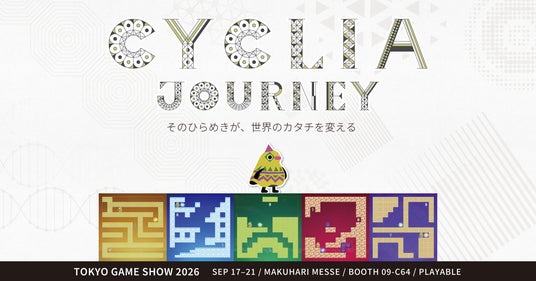
Why it ranked here: CYCLIA JOURNEY has the cleanest “aha” idea in the bottom half of this list. Its world is governed by replication and re-creation: you copy pieces of the environment, connect them differently and use the rebuilt geometry to reach keys and routes that did not exist before.
That is exactly the kind of mechanic a show-floor demo can sell. You do not need a lore lecture or forty minutes of progression before the premise starts working. The player sees an impossible route, understands the world can be copied, and gets to discover what the rule allows.
Wonderfy is an unusual developer for this space. The company built its reputation around thinking and education products, then pushed into an original game aimed at adults. CYCLIA JOURNEY released in November 2025 on Steam and Switch, and the company is bringing it to TGS for its first appearance there.
Steam’s review sample is tiny — only 11 reviews in the current English-language snapshot, with 81% positive — so we are not treating that as proof of broad player consensus. What gives it the fifth slot is the mechanic itself: elegant, visual and immediately testable.
Who should stop: puzzle-platformer players who like games that teach one strange rule and then keep finding new ways to make that rule betray their assumptions.
The catch: it is already released, the audience signal is still small, and this is the most niche concept in the five.
#4 — Aeruta: Fight Monsters, Bake Bread, Revive a Town

Aeruta’s pitch sounds like somebody combined two Steam tabs by accident and discovered dinner.
You head into side-scrolling combat zones, fight monsters for ingredients and materials, then return to run a bakery and help revive a struggling town. Action creates resources; the shop gives those resources meaning; the town gives the whole loop a reason to continue.
Unlike most games on this list, Aeruta is not asking us to trust only a trailer. The PC version launched in November 2025 after Early Access, and Steam currently shows 98% positive English-language reviews across 379 reviews, with recent sentiment also sitting in Very Positive territory. That is still not a massive sample, but it is enough to tell us the hybrid loop has connected with real players.
TGS is useful because Gravity Game Arise is putting the upcoming console version in people’s hands, including the first playable Nintendo Switch demo ahead of the December 10 console release.
Why it is only #4: the game is more proven than the projects above it, but “action RPG plus shop management” is no longer a shocking combination. Aeruta wins on execution confidence more than raw novelty.
Who should stop: fans of Moonlighter-style loops, cute pixel art, light management and action games where a dungeon run feeds a cozy home-base system.
The catch: PC players can already buy it for $19.99 USD, so the TGS demo is most valuable for console players deciding whether the hybrid works for them on controller and handheld hardware.
#3 — Escape By Spoon: The Entire Pitch Is in the Name, and Somehow It Gets Weirder
You are in prison. You have a spoon. Freedom is apparently underground.
That would already be enough to make us stop at PaiBand Studio’s booth, but Escape By Spoon keeps escalating the bit. The first-person loop mixes tunnel digging, resource gathering, tool upgrades, cooking, combat and stealth while wrapping everything in a rubber-hose, 1930s-cartoon-inspired visual style.
By day, you work as the prison chef. Ingredients can be dirty, rotten or still alive. Below the prison, the same spoon becomes a digging tool and a weapon. Day, Night and Midnight change the dangers and rewards, and something in the prison very much does not want you leaving.
This is the strongest one-sentence hook in the ranking. More importantly, PaiBand is officially exhibiting in TGS’s Selected Indie 80 area at booth E-26, so this is not a game we found in a random coming-soon list and stapled to a TGS headline.
Why it ranks #3: instant readability, a coherent visual identity and a gameplay loop that turns the joke into actual systems. The unanswered question is execution. The Steam page still lists the game as coming soon with no user reviews, so the TGS build needs to prove the digging, cooking and combat are more than trailer-friendly ingredients.
Who should stop: players who liked the obsessive upgrade loop of A Game About Digging a Hole, the tonal weirdness of Cuphead-era cartoon aesthetics, or genre mashups that are comfortable being a little stupid.
The catch: no released build means no meaningful player-sentiment signal yet. Wishlist it for the idea; judge it after the demo.
Wishlist Escape By Spoon on Steam
#2 — HEIMA: A Parallel-World Puzzle Game That Looks Like It Wants Your Whole Attention
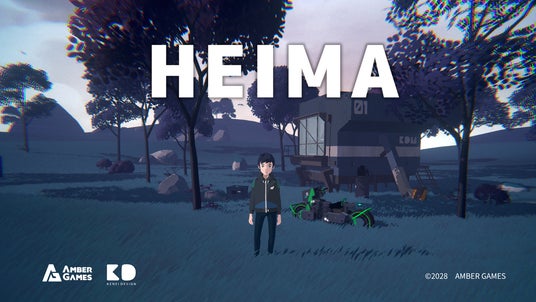
HEIMA is the least commercially proven game in our top two and probably the most visually ambitious.
AMBER GAMES and KENEI DESIGN describe it as an “immersive spatial puzzle action game.” The story follows a boy searching for his missing brother after humanity’s teleportation network connects to parallel worlds that were never supposed to exist.
That setup gives the spatial-puzzle premise a narrative reason to keep changing the rules. Different worlds are not just level themes; they are the consequence of the technology at the center of the mystery.
The project was selected for Japan’s Agency for Cultural Affairs media-arts creator support program, and the team is bringing a playable version to TGS. It currently targets PC and a 2028 release, which is both exciting and the reason it does not take #1.
Why it ranks #2: atmosphere, premise and spatial puzzle potential. From the material being shown, HEIMA feels like a game that wants the player to notice architecture, distance and impossible transitions rather than simply solve switch-and-door puzzles.
Who should stop: players drawn to games like Portal, Viewfinder or narrative puzzle adventures where discovering how the world works is part of the story.
The catch: 2028 is far away. A TGS demo can prove the core interaction feels special, but it cannot prove the eventual pacing, scope or final polish. This is a “follow closely” recommendation, not a preorder-shaped hallucination.
What we would ask at the booth: how much freedom do the spatial systems give the player, and how much of the final game is authored puzzle solution versus systemic experimentation?
#1 — Galvatein: Adventurers’ Guild Turns Fantasy Heroics Into an Office Job — and That’s the Point
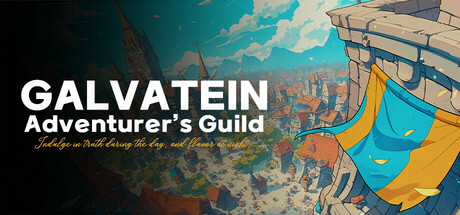
Every fantasy game wants to make you the adventurer.
Galvatein wants you to be the poor bastard checking their paperwork.
You play a guild receptionist. Adventurers return from quests claiming they killed monsters, rescued people and completed contracts. Your job is to determine whether they are telling the truth by inspecting loot, consulting bestiaries, checking maps and licenses, questioning the adventurers and deciding what the guild should officially accept.
That is already a fantastic Papers, Please-style inversion of the fantasy genre. Then the game complicates it with ethics. What happens when the rules say one thing but the adventurer in front of you has a situation you cannot ignore? What if you want the loot? What if following procedure keeps the guild stable but hurts the person?
At night, the guild tavern opens. You hear the adventurers’ stories, cook monster cuisine from ingredients gathered during quests, and learn who these people are when they are not standing at your counter asking to be paid.
The Early Access launch is scheduled for September 22, one day after TGS ends, and Steam already has a downloadable demo. The developer says Early Access will contain six chapters and roughly half the content planned for the full release, which is currently targeted for the first half of 2027.
Why it wins: Galvatein scores highest on originality and instant comprehension while also having enough concrete systems to suggest the joke can sustain a game. “Fantasy guild receptionist who investigates adventurers’ claims” is the kind of pitch we can explain in one breath, yet the verification, questioning, tavern and cooking systems give it places to go after the laugh.
Who should stop: players who love deduction, narrative choices, fantasy worldbuilding and work-simulation games where ordinary procedures expose extraordinary stories.
The material caveat: the Steam page discloses generative AI use during early character/background concept exploration and for background music, with the developer saying visual material was manually refined and finalized and that no generative AI content is created during gameplay. If AI-assisted production is a purchasing dealbreaker for you, that disclosure belongs in your decision.
The other catch: Early Access launches with roughly half of the planned final content. If unfinished stories frustrate you, play the demo now and consider waiting for the targeted 2027 full release.
Play the Galvatein Demo or Wishlist It on Steam
The One We’d Play First
That is Galvatein.
Not because it has the biggest budget, the prettiest trailer or the safest commercial pitch. It wins because Tokyo Game Show is at its best when you encounter an idea you did not know you wanted.
A fantasy game about checking whether heroes actually did their jobs is exactly that kind of idea.
HEIMA is the one we would watch for long-term ambition. Escape By Spoon is the one we would show a friend just by saying the title. Aeruta is the safest recommendation if you want existing player evidence. CYCLIA JOURNEY is the purest puzzle-design curiosity.
And this is before TGS even opens. Eighty Selected Indie titles emerged from more than 1,500 submissions, so there is a very good chance something on the floor makes this list look obsolete by Thursday afternoon.
Good. That is what a game show is supposed to do.
Sources / Official Links
Tokyo Game Show — Indie Game Project / Selected Indie 80
Tokyo Game Show — 2026 event overview
Steam — Galvatein: Adventurers’ Guild
AMBER GAMES / BS Asahi — HEIMA announcement and TGS demo
PaiBand Studio — TGS 2026 / Escape By Spoon
Steam — Escape By Spoon
Steam — Aeruta
Wonderfy — CYCLIA JOURNEY at TGS 2026

